
HP Printer Not Printing After a Windows Update: How to Fix It
By Tech Entertainer Team · 2026-08-21
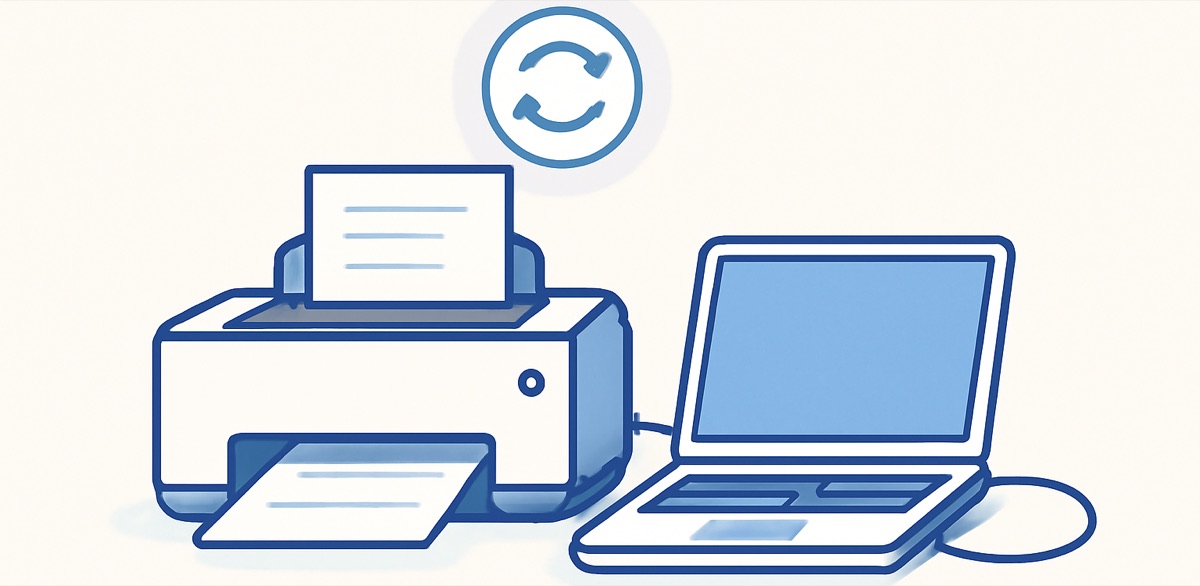
Your HP printer worked fine last week. Then Windows installed an update, restarted, and now nothing prints. Jobs pile up in the queue, or you get a flat "RPC server is unavailable" error the moment you hit print. This is a known pattern after Windows updates, and it almost always traces back to one of three things: the Print Spooler service, the RPC service it depends on, or a driver Windows silently swapped out during install.
Here is how to find out which one broke, and fix it, without reinstalling Windows or replacing the printer.
Why Does a Windows Update Break Printing?
Windows updates restart background services and sometimes replace print drivers with a generic Microsoft version during installation. When the swapped-in driver does not match your HP model correctly, or when the Print Spooler service fails to restart cleanly, printing stops.
The Print Spooler is the Windows service managing every print job, queuing them and sending them to the correct printer. It depends on another service called Remote Procedure Call (RPC), which handles communication between Windows components. If either service stops, gets disabled by the update, or loses the permissions it had before, print jobs stall or fail outright. HP printers get hit more often than some other brands because HP's full driver package installs its own background services (like HP Print Scan Doctor components), and those need to restart correctly after the update too.
How Do I Know Which Error I'm Dealing With?
Check the exact message Windows gives you. It tells you which service failed.
- "RPC server is unavailable" or error code 0x800706BA: the Remote Procedure Call service or its Endpoint Mapper is not running.
- "Print Spooler service is not running": the spooler itself stopped and needs a restart.
- Error 0x0000011b: Windows lost the network path to a shared or network printer, common after an update changes SMB or network discovery settings.
- Printer shows "Offline" in Settings even though it is powered on and connected: usually a driver or spooler issue, not an actual connection problem.
- Job sits in the queue with no error at all: the spooler queue itself is stuck and needs to be cleared.
Match your symptom to a fix below and start there instead of working through every step.
How Do I Restart the Print Spooler Service?
Restarting the Print Spooler clears a stuck queue and resets the service Windows uses to send jobs to your printer. It fixes the problem in most cases where nothing prints and no error appears.
- Press Windows key + R, type
services.msc, and press Enter. - Scroll to Print Spooler in the list.
- Right-click it and select Stop.
- Open File Explorer and go to
C:\Windows\System32\spool\PRINTERS. - Delete every file in this folder. These are stuck job files left over from before the update; clearing them removes anything jammed in the queue.
- Go back to Services, right-click Print Spooler again, and select Start.
- Right-click it once more, choose Properties, and set Startup type to Automatic if it isn't already set this way. Windows updates occasionally reset this to Manual.
Try printing a test page after this. If the spooler was the entire problem, it works now.
How Do I Fix "RPC Server Is Unavailable" on a Printer?
This error means the Remote Procedure Call service, which the Print Spooler depends on, is not running or not reachable. Restart both RPC-related services and confirm they are set to start automatically.
- Open
services.mscagain. - Find Remote Procedure Call (RPC). It should already show as Running with startup type Automatic. If it is stopped, right-click and start it. This service almost never needs to be restarted manually since Windows relies on it constantly, so if it stopped, something during the update interrupted it.
- Find RPC Endpoint Mapper. Confirm it is Running and set to Automatic.
- Find DCOM Server Process Launcher. Same check: running, automatic.
- Restart the Print Spooler service using the steps above, since it needs RPC running first before starting cleanly.
- If the printer connects over your network rather than USB, check whether Network Discovery is turned on: go to Settings > Network & internet > Advanced network settings > Advanced sharing settings, and confirm Turn on network discovery is selected for your current network profile.
If RPC keeps stopping on its own after you restart it, run sfc /scannow from an elevated Command Prompt (right-click Start, choose Terminal (Admin), then run the command). This checks for Windows system files the update possibly corrupted, sometimes the reason RPC crashes repeatedly.
Do I Need to Reinstall My HP Driver?
Reinstall the driver if the spooler and RPC services are both running normally but the printer still shows offline, prints blank pages, or Windows lists it under a generic name instead of your actual model. This mismatch usually means the update replaced your HP driver with a Microsoft generic one.
- Go to Settings > Bluetooth & devices > Printers & scanners.
- Click your HP printer, then Remove device.
- Open Control Panel > Programs > Programs and Features, find any entry starting with "HP," and uninstall it. This removes the leftover driver files a simple device removal leaves behind.
- Restart your PC. This step matters: Windows sometimes will not release a locked driver file until after a restart, and skipping it causes the new install to fail silently.
- Go to 123.hp.com or HP's support site, search your exact printer model number (check the label on the printer itself, not the box), and download the full driver package instead of the basic driver.
- Run the installer and let it detect your printer over USB or Wi-Fi automatically.
This fixes the problem in the majority of post-update cases where services are running fine but the printer itself will not respond correctly.
What If the Printer Still Won't Print After All of This?
Check Windows Update's own known-issues list before troubleshooting further. Go to Settings > Windows Update > Update history, find the update installed right before the problem started, and look for printer-related entries under "Known issues and notifications" on Microsoft's support page for this specific update. Microsoft has, in past updates, acknowledged printer regressions and issued a follow-up patch rather than leaving it to individual driver fixes.
If nothing on this list matches, check your user account's permissions on the printer itself. Right-click the printer in Printers & scanners, choose Printer properties, go to the Security tab, and confirm your account has Print permission checked under Allow. Some updates reset custom permission changes back to Windows defaults, silently blocking a non-administrator account from printing while an admin account works fine.
Getting an HP printer back online after a Windows update almost always comes down to the spooler, RPC, or a swapped driver. Work through those three in order, and the fix is usually done inside twenty minutes without touching hardware or reinstalling Windows itself.
Frequently Asked Questions
Will reinstalling my HP driver delete my print history or settings?
No. Uninstalling the driver only removes the software talking to the printer. Your documents, saved files, and Windows settings stay untouched. You will need to set your paper size and default tray preferences again if you had customized them.
Why did this only start after a Windows update and not before?
Windows updates sometimes replace or reset the generic print driver Windows installed automatically, restart background services with new default permissions, or change how User Account Control handles driver installation. Any of those three breaks a printer connection working fine the day before, even though nothing about the printer itself changed.